Agriculture and wellbeing: from the smart cap to Girasole, the flower-shaped IoT sensor

At Maker Faire Rome, only innovative agriculture that is good for the Planet
Microeden Dot is a smart cap that monitors and regulates light, humidity and air quality inside bottle terrariums. There is also a sensor that reads the microclimate and predicts diseases up to ten days in advance, and a project by Ahmad Abbasi and Muhammad Naveed Anjum, who are tackling a crucial challenge for agriculture: making wheat more resistant to soil salinity. Innovative agriculture that is good for the planet takes centre stage at Maker Faire Rome 2025.

credits microeden.io
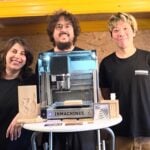
Microeden Dot
Mirko and Arturo, a programmer with a passion for gardening and an electronic engineer with open source experience, came up with a simple but ingenious idea: to make terrariums smart. The result is Microeden Dot, a smart cap that monitors and regulates light, humidity and air quality inside bottle terrariums. Designed to blend aesthetics and technology, the device automates plant care without interfering with their natural growth. Internal sensors allow for a controlled microclimate, while the project already has its sights set on the future: a community of enthusiasts, new accessories, and a philosophy that renews an age-old hobby with a maker spirit.
credits sole.girasole.farm
Girasole, the flower-shaped IoT sensor
Mario is a maker from Basilicata with a clear vision: to help small olive growers survive new climate challenges. In a land where olive trees have been speaking for centuries, he decided to listen to them with modern tools. And so he created Girasole, a flower-shaped IoT sensor that reads the microclimate and predicts diseases up to ten days in advance. Behind the elegant design lies a powerful platform: satellite data, artificial intelligence and a traffic light system that guides decisions in the field. Over 220 companies have already adopted this technology, which was born out of hackathons, awards on Hackster.io and hours spent between code and soil. Mario has not only created a product: he has restored confidence and control to those who cultivate with their hands and hearts.
The challenge of developing wheat that is more resistant to soil salinity
Ahmad Abbasi and Muhammad Naveed Anjum are tackling a crucial challenge for agriculture: making wheat more resistant to soil salinity. In many areas of the world, rising water tables and intensive irrigation are compromising crops; for this reason, their genetic editing work aims to ensure stable yields even in difficult conditions. The Enhancement of Salt Tolerance in Wheat via Editing | Lahore project combines advanced biotechnology and global food needs, with the aim of developing wheat varieties capable of thriving where production is currently at risk. This is laboratory research with a potentially enormous impact on the future of food security.
Follow us, subscribe to our newsletter: we promise to let just the right content for you to reach your inbox